


By Andy Beckett, The Guardian:
In the face of multiple crises, disruptive technology and populism, making Britain orderly again is an
impossible goal
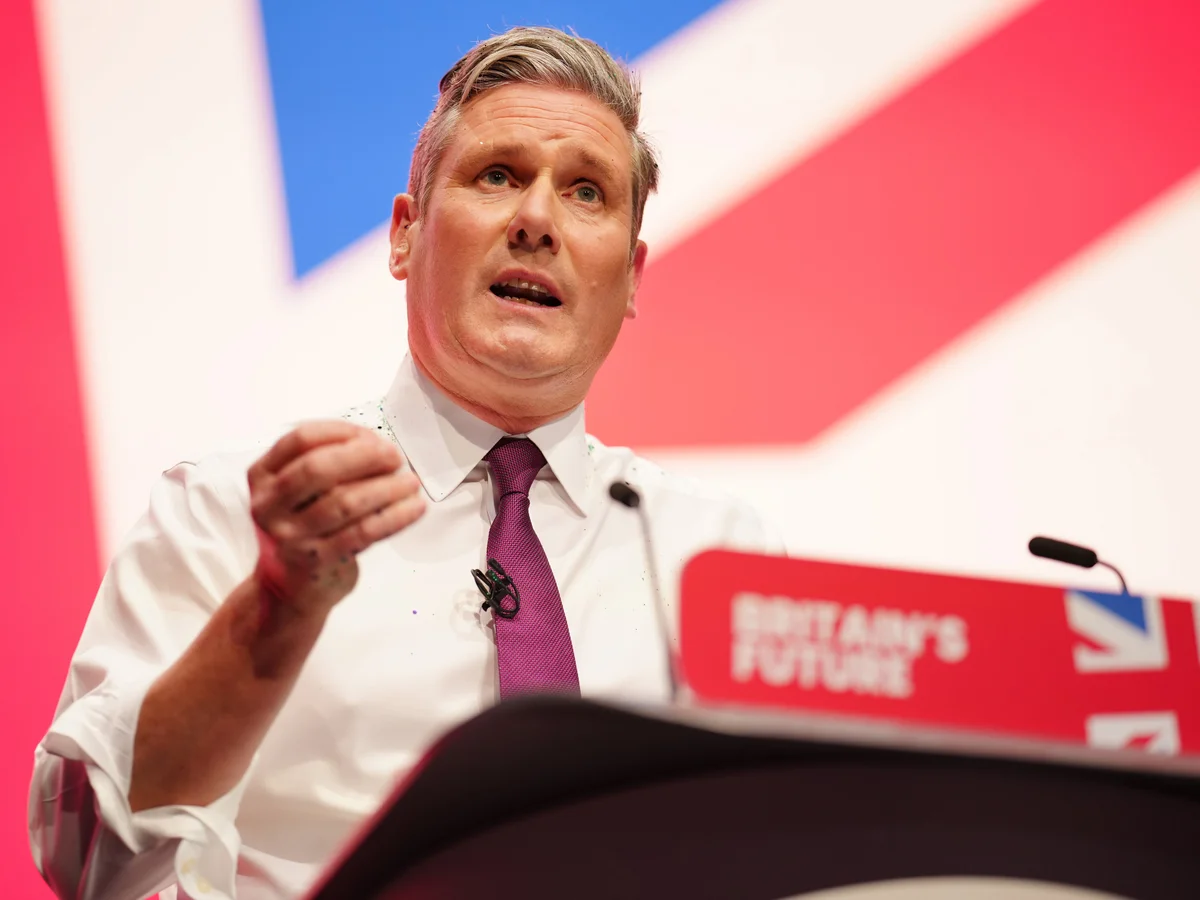
This Labour government loves rules. Fiscal rules, stability rules, investment rules, immigration rules and rules restricting protests: this government’s first impulse, when faced with the fluidity and chaos of the modern world, is to put in boundaries and try to police them. Keir Starmer, a methodical person as well as a former director of public prosecutions, is so keen on orderliness that in 2022 his close colleague Lisa Nandy called him “Mr Rules”.
There are things to be said for this approach. Many voters have been saying for at least a decade that they want politicians to exert more control over Britain’s erratic trajectory. Meanwhile the recent catastrophic administration of Boris Johnson, with its vast carelessness about Covid deaths, Brexit and immigration, still looms over our politics as a demonstration of what happens when governments have little interest in rules. As tech oligarchs, bond traders, international criminals, and digital and physical viruses increasingly prey on vulnerable people, it can be argued that a libertarian or fiscally loose government is a luxury most Britons can’t afford.
And yet, so far, Labour’s politics of rules isn’t working. Last week’s immigration announcements, which “will make Britain’s settlement system by far the most controlled and selective in Europe”, according to the home secretary, Shabana Mahmood – rapidly becoming an even more severe figure than Starmer – have not lifted Labour’s dire poll ratings. This week’s tax-raising budget, which prioritised reassuring the bond markets that the government will keep to its “iron-clad” fiscal rules, also feels unlikely to dramatically improve Labour’s standing – despite the inclusion of some redistributive measures, such as a mansion tax, which may match many voters’ anti-elite mood. Although much of the financial establishment, media and electorate believe that Britain is in an economic and social crisis, the more Starmer and his chancellor, Rachel Reeves, offer to restore order, the more the public seem to dislike them.
Why are Mr Rules and Labour’s sober remedies so widely rejected? His and Reeves’s limits as communicators have clearly played a part. So have the damagingly regular occasions when ministers have failed to behave with rectitude themselves. Although this government’s scandals have been far smaller than those of its Tory predecessors – Angela Rayner underpaying stamp duty hardly compares to neglecting to properly organise the evacuation of Afghanistan – they have enabled Labour’s enemies to deploy a favourite and effective weapon: the claim that anyone at all leftwing is a hypocrite at heart. Rather than really considering Starmer’s programme, many voters have thus been able to stay in an almost nihilistic comfort zone, believing his government is no better than Johnson’s.
There are also deeper reasons for the failure of Starmer’s emphasis on rule-making. The capacity of the British state to enforce ever more rules – for example, checking that millions of immigrants who want to be Britons have been model residents – has almost certainly been diminished by Tory austerity. Not recognising this is one of the many ways in which Labour appears to have underprepared for power.
Even if the state’s ability to manage much of society can eventually be restored – and even if you think such a situation would be desirable – by then many voters may have moved on in terms of how they conceive of the government being in control. EU membership used to be the supposed source of our national instability; now it’s our porous borders (even though immigration is actually falling fast); next year, it might be multiculturalism – already a target for rising hard men of the right such as Robert Jenrick and Matthew Goodwin – or the crime rate, already being talked up by Nigel Farage.
The claim that this country is in chaos is one that rightwing journalists and politicians have a vested interest in making, particularly during a Labour government, as it enables them to scapegoat groups they don’t like and demand authoritarian solutions. In this context, voter anxiety is constantly shape-shifting, and hard for even a competent, well-resourced government to address for long. During the calmest, most popular years of Tony Blair’s premiership – which seem another world now – plenty of Britons still believed that his government needed to “get a grip”, as focus groups regularly told Blair’s pessimistic public opinion guru, Philip Gould.
Even more challengingly for Starmer, while many voters say they want a government in control, they are often drawn to politicians promising something else: risk, radical change or simply entertainment. Over the past decade, Johnson, Jeremy Corbyn, Farage and Zack Polanski have all enjoyed surges of support. Sterner, more orthodox party leaders such as Starmer, Rishi Sunak and Theresa May have often left voters cold.
“In the Britain we make, we will all play by the rules,” Starmer pledged in 2022. But the disruption of politics and everyday life by digital technology, the addictive rebelliousness of populism, and the widespread, justified conviction that conventional politics is exhausted and insufficient for today’s huge crises all mean that making Britain orderly again is an old-fashioned, perhaps impossible goal.
If Labour’s mood and popularity don’t improve soon, the party may decide to pursue a different project under a different leader. Under the ideologically flexible Andy Burnham, or the combative Rayner, or even Wes Streeting – currently trying to shed his reputation as a rigid Labour rightwinger – the government could conceivably reinvent itself as a less rule-fixated, more nimble administration that better fits the times. In Spain, the centre-left premier Pedro Sánchez has won three elections in a row, despite a rightwing populist upsurge, partly by presenting immigration and liberal social change as opportunities rather than threats, and partly by taboo-breaking parliamentary moves, including coalitions with the radical left.
However, given the long history of Labour prioritising respectability, especially when in trouble, it’s just as likely that the government will become even more fixated on control under Mahmood or another disciplinarian. Labour has always been a complicated party, with both authoritarian and libertarian traditions, but both inside and outside Labour the severe approach is often seen as the realistic one – even when it’s clearly not working well.
Labour governments, assuming that there are further ones, will always need to impose some new rules – to prevent this country lapsing back into ancient hierarchies or lurching forward into even worse forms of inequality. But if Labour is going to inspire voters again, rules are not enough.
