


By Pavel Devyatkin – Responsible Statecraft:
As Europeans try to redirect Trump, his Silicon Valley supporters have ideas of their own, involving low-regulated communities and access to rare earths.
This past week, President Trump removed any remaining ambiguity about his intentions toward Greenland. During a White House event, he declared he would take the Arctic territory “whether they like it or not.” Then he laid down what sounded like a mobster’s threat to Denmark: “If we don’t do it the easy way we’re going to do it the hard way.”
Trump also reportedly ordered special forces commanders to come up with an invasion plan, even though senior military officials warned him it would violate international law and NATO treaties. In an interview with the New York Times, Trump said, “I don’t need international law.”
Behind closed doors, Secretary of State Marco Rubio has been trying to calm Congress, saying all this military posturing is just a way to pressure Denmark to negotiate. Meanwhile, Stephen Miller, Trump’s deputy chief of staff, dismissed Denmark’s authority over Greenland claiming, “nobody is going to fight the United States militarily over the future of Greenland.”
Meanwhile, seven European countries issued a joint statement that “Greenland belongs to its people” and some NATO allies hope to temper Trump by offering to station a military force on the island to counter Russia and China in the Arctic.
In an apparent effort to stave off Trump’s appetite for Greenland, UK Prime Minister Keir Starmer
reportedly told Trump that he shares his view on Russia’s threat to the region and that he would consider sending troops to help defend against it. Meanwhile, Germany is proposing establishing a joint Arctic NATO mission and Danish Prime Minister Mette Frederiksen said a U.S. takeover of Greenland would mark the end of NATO.
Given the massing opposition to Trump’s quest for Greenland, and questionable security benefits from annexing the island, what’s really going on here?
Why Trump wants Greenland
The Trump administration can’t seem to decide why it needs to seize Greenland. At first, the president claimed “Russian and Chinese ships are all along the coast,” a claim rejected by senior Nordic diplomats: “I have seen the intelligence. There are no ships, no submarines.” Later, Trump warned, “If we don’t take Greenland, Russia or China will, and I’m not letting that happen.”
Vice President JD Vance has pivoted to missile defense, arguing “the entire missile defense infrastructure is partially dependent on Greenland.” There is no debating the strategic value of Greenland. The U.S. base on the island, Pituffik Space Base, provides early-warning radar coverage of Russian or Chinese bombers and missiles.
However, boosting that capability does not depend on Washington taking ownership of the island itself. Existing defense agreements already allow the U.S. to project power and modernize its capability without the diplomatic catastrophe of annexation.
National security or corporate greed?
The mainstream media has extensively covered Trump’s Greenland ambitions, emphasizing Arctic security competition with China and Russia as well as strategic shipping routes opening due to melting ice. Most mention Greenland’s vast deposits of critical minerals essential for electric vehicles and renewables.
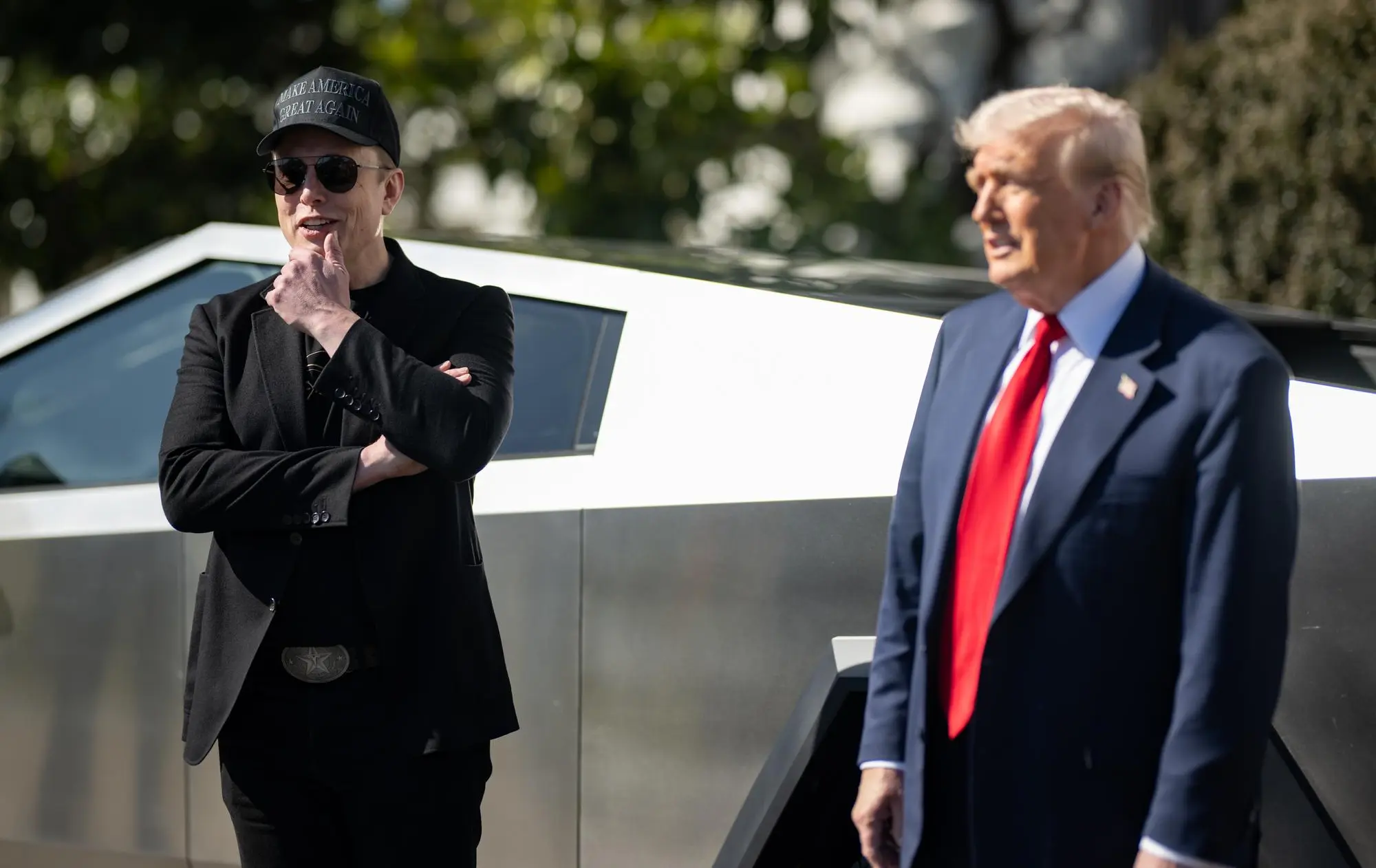
But they stop short of examining the forces that may be actually driving the minerals agenda: tech billionaires like Peter Thiel and Elon Musk, who see Greenland not just as a source of rare earths, but as a laboratory for their libertarian economic and social experiments. These tech-billionaires envision unregulated “freedom cities” in Greenland, free from democratic oversight, environmental laws, and labor protections.
Ken Howery, Trump’s ambassador to Denmark and a PayPal co-founder with Thiel and Musk, has reportedly been in talks to set up these low-regulation zones.
There’s an ironic clash of interests here: the national security establishment wants strong state control over strategic territory. The tech-billionaire funding Trump want the opposite: a deregulated playground for their anarcho-capitalist experiments. Both share a common blindness to Greenlandic sovereignty and Indigenous rights.
It’s profoundly disturbing how the climate crisis is being reframed as opportunity. Greenland’s ice sheet is melting faster due to rising temperatures. Indigenous Greenlanders are watching their traditional way of life vanish as the ice disappears.
The 56,000 Greenlanders, 89% of whom are Indigenous Inuit, have made their position clear: 85% oppose joining the U.S. The last parliamentary elections delivered victory to parties that openly reject Trump’s advances. But you wouldn’t know it from the way Washington talks about Greenland. Their voices are barely a whisper in all these discussions of annexation. At the same time, most Americans oppose the idea of buying or invading Greenland.
By any means
The White House is trying every angle to get its way. U.S. officials have discussed paying every Greenlander a lump sum from $10,000 to $100,000, essentially trying to buy approval from a population that keeps saying no.
The White House is also trying to enter a Compact of Free Association (COFA) agreement with Greenland. In such an agreement, the U.S. only provides mail delivery and military protection operations in exchange for the U.S. military to operate freely and duty-free trade.
Such agreements exist with islands like Palau, the Marshall Islands, and Micronesia. However, this arrangement is unlikely to succeed with Greenland. COFA agreements have previously been inked with independent countries, and Greenland would need to separate from Denmark for such a plan to proceed.
Risks for America
This crisis extends far beyond Greenland. This is about what kind of country America wants to be, and how it leads on the world stage. Will the U.S. lead through partnership and mutual benefit, or through threats and coercion? Does Washington respect self-determination (a principle we claim to champion) or only when it’s convenient?
This obsession with annexation reduces everything to a resource grab. Missing entirely is any recognition of Greenland as a home to people with their own dreams, rights, and hopes for the future.
President Trump promised to end forever wars and take on the foreign policy establishment. But these threats over Greenland show the same old thinking that might makes right and that other countries’ independence only counts when it serves our perceived interests. America’s true interests lie not in reviving imperialism but in demonstrating that partnership and mutual benefit offer a better path than aggressive unilateralism.
